
Understanding Stablecoin Payments: A Simple Guide for First-Time Users
- By megaman
- No Comments
Many customers ask about cryptocurrency payments, especially when they see the option to pay with a stablecoin.
If you are new to crypto, the terminology can feel confusing at first.
Words like stablecoin, Ethereum, or PayPal USD sound similar, but they actually refer to different things.
This guide will explain everything in simple terms so you can understand how the payment works and which apps you can use.
What Is a Stablecoin?
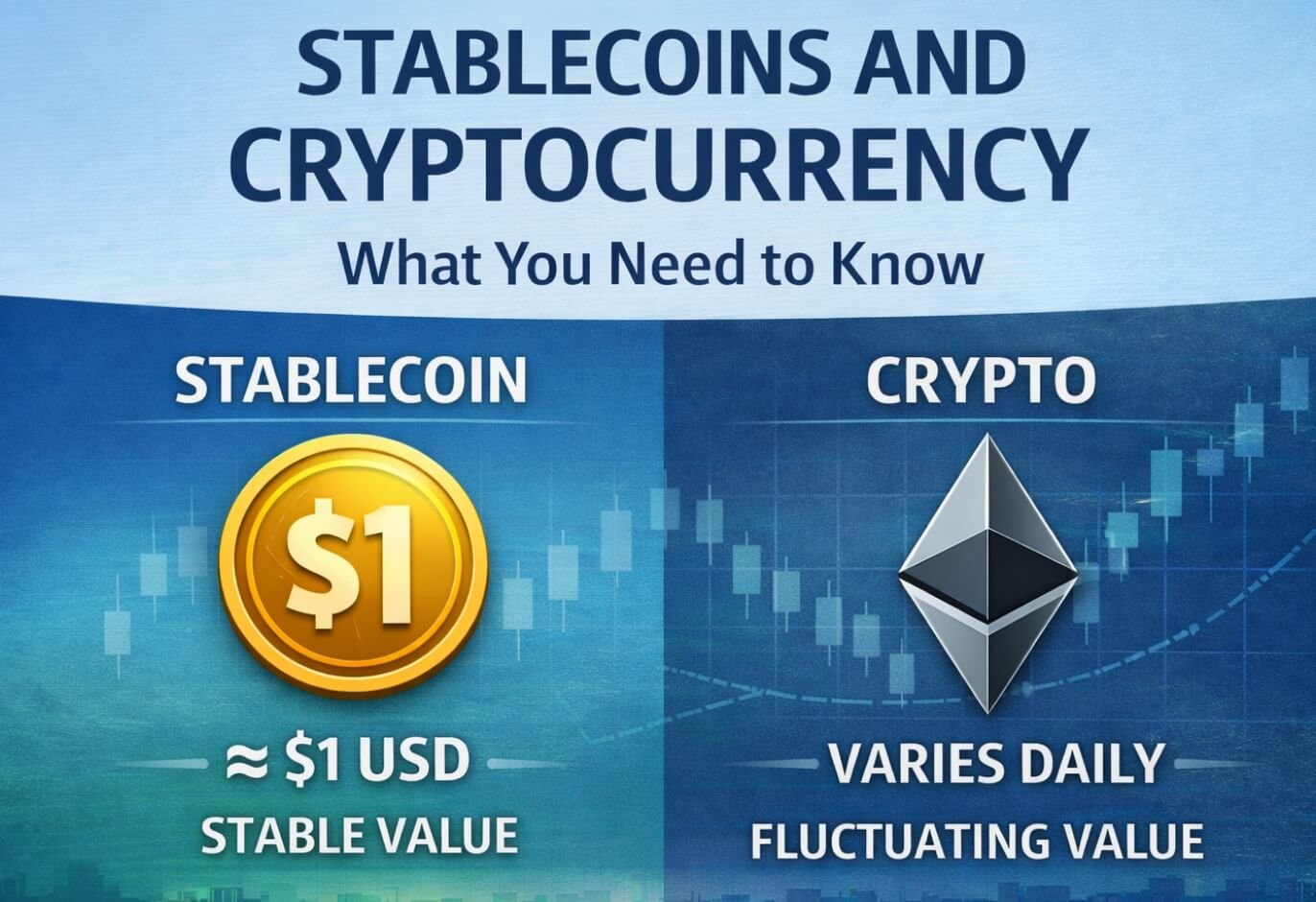
A stablecoin is a type of cryptocurrency designed to keep a stable value. Unlike many cryptocurrencies that constantly change price, stablecoins are usually tied to the value of the US dollar.
The most common examples are:
- USDC (USD Coin)
- USDT (Tether)
Both of these aim to stay close to $1 USD per coin.
So if you send 100 USDC, it is meant to equal about $100 USD. This stability is why many online stores use stablecoins. It avoids the large price swings seen in other cryptocurrencies.
Is a Stablecoin the Same as PayPal USD?
You may have heard of PayPal USD (PYUSD). This is also a stablecoin issued by PayPal.
In simple terms:
| Payment Type | What It Is | Value Stability |
|---|---|---|
| Stablecoins (USDC, USDT) | Crypto tokens pegged to USD | Stable around $1 |
| PayPal USD (PYUSD) | PayPal’s own stablecoin | Stable around $1 |
| Ethereum (ETH) | A normal cryptocurrency | Price fluctuates constantly |
So while PayPal USD is technically a stablecoin, most crypto payments online use USDC or USDT, not PYUSD.
Is Ethereum the Same Thing?
No.
Ethereum (ETH) is a regular cryptocurrency, similar to Bitcoin. Its value moves up and down depending on market conditions.
For example:
- ETH could be $2,000 today
- $2,150 tomorrow
- $1,900 next week
Because of this volatility, some stores prefer stablecoins, since the value stays predictable.
Where to Buy Stablecoins (Best Apps by Country)
If you are planning to pay with stablecoins like USDC or USDT, the first step is buying the coins through a crypto exchange or wallet app.
Different countries have different regulations, so the best option often depends on where you live. Below is a simple guide to the most reliable platforms in the United States, United Kingdom, Europe, and Australia.
United States
Best Regulated Options
The United States has some of the strictest crypto regulations, which means many exchanges require identity verification (KYC).
Recommended regulated platforms
- Coinbase
- Kraken
- Gemini
These platforms are widely considered among the most trusted exchanges because they follow U.S. compliance standards and security practices.
Many beginners prefer Coinbase because the interface is very simple, while Kraken is often praised for strong security and lower trading fees.
Good for:
✔ Buying USDC directly with bank transfer
✔ High security and consumer protections
✔ Beginner-friendly apps
Less-Restricted or International Exchanges
Some users prefer exchanges with fewer restrictions and a larger selection of tokens.
Common examples include:
- Bitget
- Bybit
- MEXC
These exchanges often list many more tokens, but they may not have the same regulatory oversight as U.S.-based platforms.
United Kingdom
Best Regulated Platforms
The UK crypto industry is supervised by the Financial Conduct Authority (FCA), and many exchanges operate under strict compliance.
Popular options include:
- Kraken
- Coinbase
- Bitstamp
These platforms support GBP bank transfers and stablecoin purchases.
Recent UK reporting rules also require investors to report crypto holdings to tax authorities, reflecting growing regulation of the industry.
Privacy-Focused Alternatives
If you prefer exchanges that require minimal identity verification, some traders use decentralized platforms such as:
- Uniswap
- Bisq
Decentralized exchanges allow crypto swaps without centralized accounts, although they may not support direct bank deposits.
European Union
Europe has quickly become one of the most crypto-friendly regions, especially with new regulations such as MiCA (Markets in Crypto-Assets).
Popular exchanges include:
Regulated options
- Coinbase
- Kraken
- Bitpanda
These platforms allow customers to purchase stablecoins using SEPA bank transfers.
Many exchanges operating in Europe maintain regulatory registrations across multiple jurisdictions to comply with financial rules.
Decentralized options
Some users in Europe prefer decentralized exchanges such as:
- Uniswap
- PancakeSwap
These allow direct crypto swaps without centralized accounts, though they usually require an existing crypto wallet.
Australia
Australia has an active crypto market with platforms registered under AUSTRAC (Australian Transaction Reports and Analysis Centre).
Best regulated platforms
- CoinSpot
- Swyftx
- Kraken
These are among the most popular exchanges used by Australian investors and beginners.
Many Australians prefer local exchanges like CoinSpot because they support AUD bank transfers and instant payments.
Quick Summary
| Region | Best Regulated | Alternative Platforms |
|---|---|---|
| USA | Coinbase, Kraken, Gemini | Bitget, Bybit, MEXC |
| UK | Coinbase, Kraken, Bitstamp | Uniswap, Bisq |
| EU | Coinbase, Kraken, Bitpanda | Uniswap, PancakeSwap |
| Australia | CoinSpot, Swyftx, Kraken | KuCoin, Bybit |
Final Thoughts
If you are new to cryptocurrency payments, the easiest approach is usually:
- Open an account on a trusted exchange
- Buy a stablecoin like USDC or USDT
- Send the coins directly to the payment wallet
While there are many exchanges available, regulated platforms are usually the safest starting point, especially for first-time users.
After you become comfortable with crypto, you may explore additional wallets or decentralized platforms depending on your preferences.